


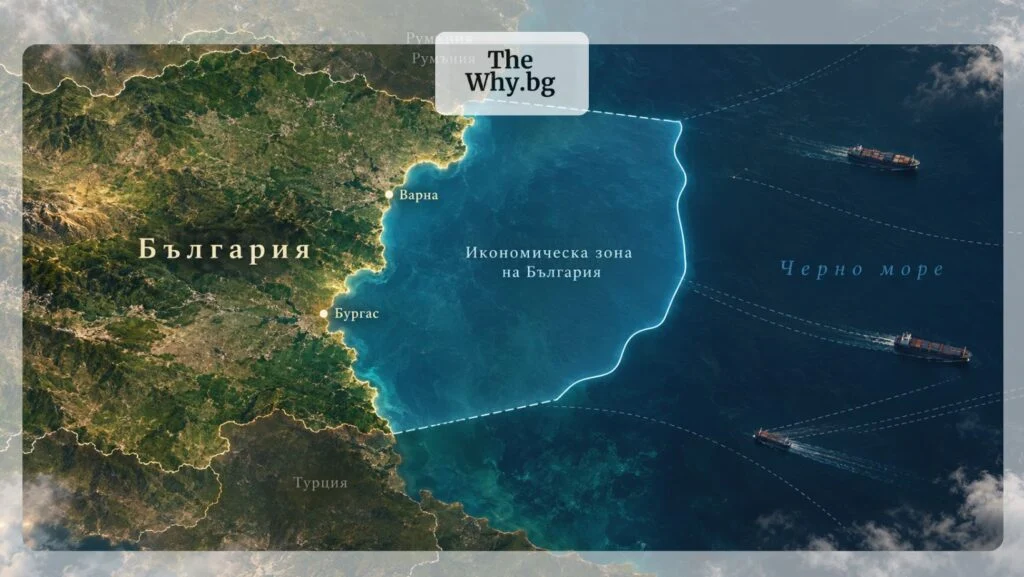
On September 16, 2026, the Joint War Committee, a committee of the London marine insurance market, published circular JWLA-035, which changes the scope of the designated risk area in the Black Sea. There is one important exception: outside it are the territorial waters of Bulgaria, Romania, Turkey and Georgia. Following the series of attacks off Bulgaria, the stakes are no longer limited to the safety of individual ships. At issue is the confidence that a cargo can reach the port, without unacceptable risk to the crew and without the transportation rendering the deal itself pointless.
On October 6, the Bulgarian ferry DIOSCURIA became involved in a rescue operation instead of remaining simply part of routine maritime traffic. Two merchant ships were attacked in the Black Sea, east of Byala. ALFA WATAN, sailing under the Togo flag, sank. A fire broke out on ABLE, flying the Palau flag. All 18 members of its crew were rescued after the ferry took them on board. A separate search began for the people from the sunken ship. This was the picture we described in our first report on the attacks.
The rescued sailors arrived in Varna with injuries, exhaustion and different accounts of what had happened. “It wasn’t a drone, it was underwater”, one of them told BNT, a testimony we examined in a subsequent report. Others described a strike by a maritime drone. The accounts raised the question of what exactly had hit ABLE, but could not themselves replace a technical investigation.
Official information at the time indicated attacks by aerial and maritime drones approximately 70 nautical miles east of Byala. On October 12, Bulgaria requested technical assistance from the EU and NATO for the investigation. The Council of Ministers said, that no remains of the drones had been found that would allow their origin to be established, and requested assistance in analyzing the physical evidence, satellite data and information collected.
Thus, the new attack did not occur after an investigation had been completed and the danger clarified. It occurred while Bulgaria was still seeking answers about the previous one…
October 13: sailors rescued again, another ship sunk
During the night leading into October 13, a distress signal was received from CHELSEA 3. The morning statement by the Council of Ministers gave the time as 01:30 and the location as 18 nautical miles east of Byala. According to the crew, the Malta-flagged ship was hit by three aerial drones on its deck and hull. All 15 sailors were rescued, seven Ukrainian and eight Azerbaijani nationals.
The people were transported to Varna. According to data from the Ministry of Defense, cited by NOVA, three were admitted to the Naval Hospital with burns, one of them also suffering a minor traumatic brain injury. It was reported that there was no danger to the lives of the three injured people.
While institutions were discussing the attack, information also emerged about a second stricken ship that had sunk east of Krapets. In its subsequent coverage, Reuters identified it as HS DIGNITY, sailing under the Guinea-Bissau flag. According to updated information, five sailors were rescued and 11 remain missing. NOVA also reported the same number of people rescued and missing.
The question of who carried out the attack remains separate
Ukrainian Foreign Minister Andrii Sybiha blamed Russia for the new strikes. In his morning statement, Bulgarian Prime Minister Rumen Radev said there was insufficiently clear evidence for a categorical accusation, although in his assessment the outcome of the attacks benefited Russia.
For shipping, however, there has already been a change that does not depend on this political dispute. On October 6, official statements placed the attacks approximately 70 nautical miles east of Byala. A week later, CHELSEA 3 was hit 18 miles from the same city. The new incident occurred significantly closer to shore.
This does not prove that all the attacks were part of the same operation. But it poses a very practical question to anyone who has to send a ship through the area: on what basis should the next voyage be considered safe enough?
And this is precisely where the risk begins, a risk that could affect Bulgaria even without a strike on one of its ports!
From the stricken ship to the rejected voyage
In attacks of this kind, we first see the immediate consequences: the damaged hull, the fire, the rescue operation and the injured people. The economic impact, however, can spread beyond the specific ship.
The reason is that the next shipment depends on several different decisions. The shipowner must accept the risk to the vessel and crew. The insurer must offer coverage under certain conditions. The contracting party must assess whether the price and timeframe still allow the deal to be completed. Maritime transport contracts contain mechanisms through which a war risk can lead to a change in the route, the port or the performance itself.
But… It is not necessary for all ships to be stopped for maritime trade to be restricted. It is enough for some of the necessary shipments to become unavailable or economically pointless.
This does not mean that Bulgaria is already under a naval blockade. It means that the question “Will shipping stop?” has a more dangerous answer than simply “yes” or “no”.
Ships may continue to sail. Some of them, however, may not handle the expected cargo, may not arrive at the agreed destination or may demand conditions that the contracting party cannot accept.
For an economy, this is a significant difference. The sea may remain open on the map while access to transportation through it gradually deteriorates.
An open port is not enough
Even before the October attacks, the insurance market had registered the expansion of the danger.
On September 16, 2026, the Joint War Committee, a committee of the London marine insurance market, published circular JWLA-035, which changes the scope of the designated risk area in the Black Sea. There is one important exception: outside it are the territorial waters of Bulgaria, Romania, Turkey and Georgia. The document predates the strikes of October 6 and 13; it was not a consequence of them.
The exception should not be replaced by the claim that insurers have declared Bulgaria’s territorial waters a “war zone”. But it is not a guarantee for every voyage to a Bulgarian port either.
The ship must reach it. And the route may pass through waters included in the risk area.
The committee itself does not set one general premium for all shipments. It identifies areas of heightened risk. Sailing in them requires notification of insurers, while the conditions are negotiated individually. Therefore, the list is not a ban on shipping and does not automatically mean that all insurance policies are terminated.
It is precisely the individual decisions, however, that can make the change harder to notice. There will not necessarily be a single document declaring that the sea is closed. Instead, separate obstacles may accumulate: an unacceptable offer, a new condition, a delayed departure or a dispute over performance.
Contracts give this risk a specific form
The VOYWAR 2025 clause of BIMCO, the international shipping organization, provides options to change or refuse certain actions related to the transport when, in the reasonable judgment of the master or shipowner, the ship, cargo or people on board may be exposed to war risk. It also sets out procedures for an alternative safe port and for adjusting the freight price when the route changes.
This is not a universal right to terminate any contract at will. The clause must form part of the specific contractual relationship, and the conditions for its application must be met.
But the practical result is clear: the port may be operating, the cargo may be ready, and the contracted ship may not arrive. That is why the security of maritime trade is not measured only by the condition of the quays. It also depends on whether the route to them remains usable.
The Red Sea has already shown how trade withdraws from a dangerous route
To understand the mechanism, we do not need to forecast an unprecedented catastrophe.
Following the attacks on ships in the Red Sea, a significant share of traffic was diverted. In an analysis dated March 7, 2024, the International Monetary Fund reports, that in the first two months of that year, trade volumes through the Suez Canal fell by 50% year on year. At the same time, passage around the Cape of Good Hope increased by approximately 74%, while the diversions added an average of ten or more days to deliveries.
Global shipping did not stop. But one major route lost a huge share of its use, and companies and their customers had to bear the consequences of going around it. This is the useful comparison with the Black Sea, not the claim that the two conflicts are identical or that the percentages can be applied to Bulgaria.
There is also a significant difference. For transport between Asia and Europe, going around Africa can preserve the final destination. For cargo that must be loaded in Varna or unloaded in Burgas, avoiding the Black Sea does not leave the same sea route intact.
The alternative would mean a different transport arrangement: a different port, an overland leg, and additional transshipment. At that point, what matters is no longer only how much longer the ship will sail, but whether the entire delivery can be organized at acceptable cost and within acceptable timeframes.
Consequently, diversion may be a solution for a particular carrier and, at the same time, a loss for the port it avoids.
Bulgaria may lose trade without losing a port
In 2025, Bulgarian seaports handled 27.49 million tonnes of cargo, according to NSI data. This is the scale of activity behind the question of maritime security, not an assessment of damage already caused by the current attacks.
To understand the potential impact, we need to look beyond the general warning that “everything will become more expensive.”
For exports, for example, higher transport costs cannot always be passed on to the buyer. If the buyer has a competitive offer from elsewhere, the additional transport cost may remain the seller’s responsibility. All else being equal, this would reduce the profit from the cargo, or make the sale unviable.
For imports, the problem may be different. The higher transport cost may be distributed among the supplier, intermediaries and the final buyer. But if the shipment is delayed, simply paying a higher price does not resolve the question of when the necessary raw material or goods will arrive. The experience of diversions in the Red Sea shows precisely the difficulties faced by businesses with limited inventories and the impact on delivery times.
The same crisis can make imports more expensive and exports less profitable. This is a possible economic consequence, not a forecast of uniform movement in all prices.
A complete halt is not predetermined
The series of attacks does not automatically mean that all shipowners will make the same decision. Different routes and contracts are not exposed to identical conditions. The insurance schedule itself distinguishes between bodies of water, and coverage is negotiated for specific circumstances.
There are also instruments through which part of the financial risk can be shared.
In March 2024, Marsh announced the expansion of the Unitymechanism, developed with the Ukrainian government and the London insurance market. Initially aimed at grain and essential food cargoes, it was expanded to ships carrying non-military cargo. State-backed banking instruments provide an initial layer of loss coverage, with the aim of supporting access to insurance on more affordable terms.
This is not a ready-made solution for Bulgaria. It shows something more important for the debate: war does not automatically make every sea shipment impossible, but maintaining it may require additional organization, protection and risk-sharing.
There is, however, a limit here that economic calculations cannot remove…
Insurance covers certain financial consequences. It does not protect a sailor from the attack itself!
Therefore, any support for shipping should not become a way of declaring dangerous sailing acceptable simply because someone will pay compensation.
Bulgaria’s response must protect not only the coast, but also access to it
On October 13, the government announced talks with the leaders of the EU and NATO and said it had requested support to strengthen the monitoring and control of maritime and airspace. It also announced plans for talks with Romania and Turkey on joint proposals for the safety of shipping.
Therefore, the question is not whether there is diplomatic activity, but how its outcome will be assessed?
For maritime trade, the answer must be sought in specific shipments. How many of the scheduled calls at Bulgarian ports are taking place? How many are being postponed or canceled specifically because of the military risk? Are there cargoes for which no ship can be found on acceptable terms?
The availability of insurance coverage must also be monitored, rather than merely repeating general claims about soaring premiums. A comparison would be meaningful for similar ships, routes and periods. Otherwise, different risks may be presented as the same “Black Sea price.”
Changes in cargo volumes must also be examined carefully. The NSI recorded a decline of 6.9% in handled maritime cargo as early as 2025 compared with the previous year. Therefore, not every future decline can be explained by the October attacks. The preceding trend, seasonality and changes in demand must be separated out.
If significant difficulties arise for important shipments, the question of limited public support may also emerge. But then the state must know what problem it is solving, which voyages it is supporting, how far the budget’s responsibility extends and when the assistance ends.
Without these conditions, there is a risk that taxpayers will cover private costs without demonstrated public benefit. Without any readiness to act, there is a risk that a difficulty affecting supplies and production will be dismissed as a problem belonging to just one company.
The national interest is not for every shipowner to receive a guaranteed profit. It is for shipments important to the country to remain possible without the lives of crews becoming bargaining chips.
Everything is fine!?
It would be just as wrong to close the question with the assurance that, as long as ships continue to sail somewhere, everything is fine…
The more significant risk is the gradual withdrawal from specific voyages: shipments becoming less predictable, some deals losing their viability, and cargoes and customers looking for another route. Contractual mechanisms for such a change exist. Whether and to what extent they will be activated for Bulgarian trade must be established, not assumed.
On October 6, a Bulgarian ferry helped rescue the crew of ABLE. On October 13, Bulgarian teams once again evacuated sailors from a stricken vessel. These operations have unconditional value: a human life saved.
The next task is for the country not to remain merely the place that takes in those injured after the latest attack. It must help create conditions in which the next ship can actually complete its voyage safely.
For Bulgaria, the crisis will not begin when the Black Sea is left without ships. It will begin when the ship we need does not set sail.