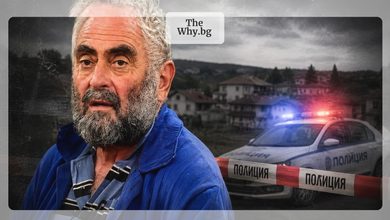
Andrew Tate: Millions’ idol goes to court over trafficking a 15-year-old girl
The charges include trafficking minors, money laundering and influencing witnesses...

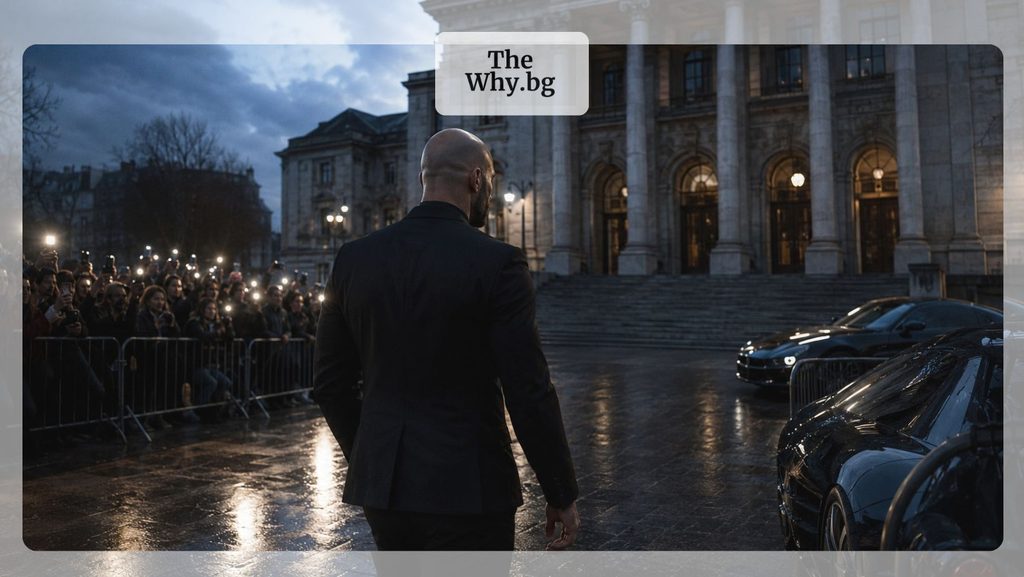
Andrew Tate: Millions’ idol goes on trial for trafficking a 15-year-old girl
AUTHOR: Ruslana PETROVA
When does fame cease to be recognition and become armor against the facts? The new indictment against Andrew and Tristan Tate places serious allegations before the court and a question before society: how did a man who built an empire on ostentatious wealth, dominance and contempt become a role model for millions?
On August 31, 2026, Romania’s Directorate for the Investigation of Organized Crime and Terrorism, DIICOT, filed a new indictment against two British citizens aged 39 and 38. On September 4, the Romanian news agency AGERPRES reported, citing judicial sources, that they were Andrew and Tristan Tate. The charges include trafficking in minors, money laundering and influencing witnesses, while the elder of the two also faces a charge of ongoing sexual acts with a minor.
These are allegations by the prosecution that must be proven in court. The Tate brothers deny committing any crimes, and the filed indictment is not a conviction. This boundary is essential. It does not, however, negate the other process that has been unfolding before our eyes for years: the transformation of fame from public recognition into a self-contained system of power, capable of absorbing success, scandal and accusation without losing its luster.
The court gets a case, the internet gets a new episode
According to DIICOT, the 39-year-old defendant lured a 15-year-old girl in the United Kingdom in 2012 by deceiving her into believing that he wanted a genuine relationship. The prosecution alleges that the minor was held at a property in Luton and forced through emotional blackmail, control, surveillance and physical violence to create pornographic content and work in video chat, and was later taken to Romania repeatedly. The younger brother is accused of assisting in this exploitation, managing the profiles and proceeds, and monitoring the financial targets that had been set.
Prosecutors further allege that $1,251,833.30 was obtained from the minor’s activities, approximately 80% of the revenue she generated. The indictment also contains separate allegations of sexual acts with another 15-year-old girl between December 2020 and mid-2021, as well as attempts in 2023 and 2024 to persuade an injured party and a witness to remain silent or give false testimony.
DIICOT is seeking the confiscation of four luxury vehicles with a total estimated value of 825,000 euros, the equivalent of the stated $1.25 million, and other frozen assets. The case has been sent to the Bucharest Tribunal. Behind the dry language of the indictment, the same symbols on which Tate’s public legend was built emerge: money, cars, control and power. In the court document, however, they are not the backdrop to success, but part of the allegations of a criminal scheme.
The new case is not the old case with a new headline
Accuracy is particularly important here. In June 2023, Andrew and Tristan Tate were sent to trial in Romania in a separate case involving allegations of human trafficking, rape and organized crime. In December 2024, the Bucharest Court of Appeal returned that indictment to DIICOT after excluding some of the evidence as inadmissible and finding procedural flaws. The decision was not an acquittal, but the proceedings did not reach trial in the form presented by the prosecution.
The new indictment stems from a second investigation launched in 2024 and contains different factual allegations. At the same time, dozens of charges in other cases have been brought against the brothers in the United Kingdom. In July 2026, Reuters reported that British authorities were pursuing a total of 59 charges against them, including rape, bodily harm and human trafficking, after the two were detained in the United States in connection with an extradition request. They deny all wrongdoing. Each of these proceedings has its own evidentiary history and should not be merged into a single media verdict.
When did fame stop being a reward?
In the old understanding, fame follows achievement. Someone creates, discovers, wins, saves, writes or manages well, and public attention arrives as a consequence. The digital age reversed cause and effect. Attention itself became an achievement, and the ability to retain it became proof that you deserved more of it.
Andrew Tate understood this shift perfectly. The former kickboxer built his influence not only through claims about masculinity, money and discipline. He turned his own persona into a product: the infallible man who always knows who is to blame, never doubts himself, measures success in possessions and translates human relationships into the language of domination. Cars are not transportation, but an argument. Women are not individuals, but evidence of status. Vulnerability is not a human condition, but a defect to be concealed with ostentatious strength.
This image works because it offers an easy geometry for a world that seems chaotic to many young men. There are winners and losers, masters and subordinates, the “strong” and the “weak.” There is no need for patience, doubt, reciprocity or the difficult building of character. It is enough to assume the pose of a winner and start speaking as if life owed you a bow.
The algorithm does not check character
Social platforms do not select moral authorities. They distribute visibility according to content’s ability to stop the scroll, provoke a reaction and bring users back for more. Anger, offense, luxury and absolute confidence are excellent fuel. A complex person loses out to caricature because a caricature is recognizable within seconds.
Tate is an almost perfect hero for this economy. The admirer sees wealth and promise. The critic sees provocation and presses “share” to condemn it. The media sees traffic. The algorithm does not distinguish admiration from disgust, both extend the life of the image. Scandal does not interrupt advertising; scandal is its cheapest distribution department.
That is why removing a profile or yet another charge rarely erases such a figure. The content continues through fan accounts, short clips, reactions, podcasts and arguments. The person no longer fully owns his own cult. It reproduces itself because thousands of people gain attention, identity or money by keeping it alive.
The idol sells permission
Andrew Tate’s most powerful product is not a course, subscription or motivational clip. It is permission. Permission to call contempt “honesty,” control “leadership,” a lack of empathy “strength,” and the person in front of you an instrument. In such a transaction, the follower does not simply buy advice. He receives a ready-made moral vocabulary in which every uncomfortable quality can be renamed as a virtue.
That is precisely why his popularity cannot be explained solely by hatred of women. The initial appeal is often more acceptable: sport, discipline, income, self-respect, rejecting self-pity. These are real needs, especially for boys who feel invisible, lonely or directionless. The problem arises when useful advice is packaged together with hierarchy, humiliation and a cult of unaccountable power. You come in for motivation and receive an entire political and intimate theory of who has the right to give orders.
Calling all his followers stupid or dangerous would be entirely useless. It would only confirm the influencer’s favorite narrative: that the outside world despises young men and he alone understands them. The more serious conversation begins with acknowledging that behind the aggressive pose there is often a genuine fear of failure, a lack of belonging and a hunger for dignity. Tate did not create these voids. He turned them into a market.
When the accusation becomes part of the brand
An ordinary reputation is shaken by a serious accusation. Cult fame can rework it into proof of significance. If the idol has taught his audience that “the system” persecutes every strong and independent man, every action by the institutions fits neatly into the script. The investigation becomes a conspiracy. The detention becomes martyrdom. Criticism becomes the fear of the weak. Even a contradictory fact can be used as new proof that an invisible enemy is acting with particular determination.
This is one of the most dangerous distortions of modern celebrity: it does not require the hero to refute the facts one by one. It is enough to discredit all the institutions that can verify them. When the court, journalism, the police, the teacher and the parent are branded in advance as part of the matrix, the idol remains the only acceptable source of truth about himself. The result is a closed system that feeds on every attack against it.
The presumption of innocence is not an indulgence for the cult
Andrew and Tristan Tate have the right to a defense, a fair trial and the presumption of innocence. This is not a polite qualification, but the foundation of the rule of law. It is equally important that this principle not become a ban on the public analysis of publicly stated ideas, business models and mechanisms of influence.
The court must establish whether the specific acts were committed and by whom. The public has a different responsibility: to decide why it granted moral authority to a man simply because he turned his visibility into a display of strength. There may be no conviction and still be words, messages and patterns of behavior that deserve criticism. There may be millions of followers and still not be a single piece of evidence of wisdom.
This is where the essence of distorted fame is revealed. It confuses popularity with being right, wealth with character and self-confidence with competence. It then makes the admirer defend not simply a celebrity, but their own decision to believe him. Rejecting the idol begins to look like an admission that you were deceived. For many, it is psychologically easier to declare the entire world corrupt.
Millions of followers, but whose example are they following?
In December 2025, the British government said that more than 40% of young men had a positive opinion of Andrew Tate when it announced measures against online misogyny and violence against women and girls. The figure does not prove that every admirer accepts everything he says, nor that watching a clip automatically leads to violence. It shows the extent to which an internet personality has managed to enter the conversation about masculinity.
This success also points to a failure beyond the screen. If the most visible response to male insecurity comes from an influencer who once described himself as a misogynist, then conventional models of strength have been left without sufficiently compelling storytellers. Responsibility, care, self-control and the ability to handle rejection are difficult to sell with engine roars and a 30-second clip. They require time, while the attention market punishes anything that does not promise instant superiority.
Real strength rarely looks impressive on social media. It pays the price of its own decisions, acknowledges its limits, does not turn intimacy into a transaction and does not need a weaker person to feel big. That is precisely what is missing from the glossy model of domination: there, a man must always prove that he is above someone else. This is not freedom, but dependence on the submission of others.
Romania is the courtroom, but the problem is much broader
The new case will be decided on the basis of the evidence and Romanian law. The broader story crosses borders: the alleged acts involve the United Kingdom and Romania, British authorities are pursuing their own proceedings, the United States is involved in the extradition process, and Tate’s image is spreading globally through platforms that turn every reaction into profitable visibility.
On September 4, 2026, the case file is before the Bucharest Tribunal, while DIICOT is seeking the confiscation of four luxury cars worth 825,000 euros and other assets if the charges are proven. On the internet, a car can serve as proof of greatness. In the courtroom, popularity has no evidentiary value.