
Alice Weidel: Germany’s anti-immigration figure who lives with a partner from Sri Lanka
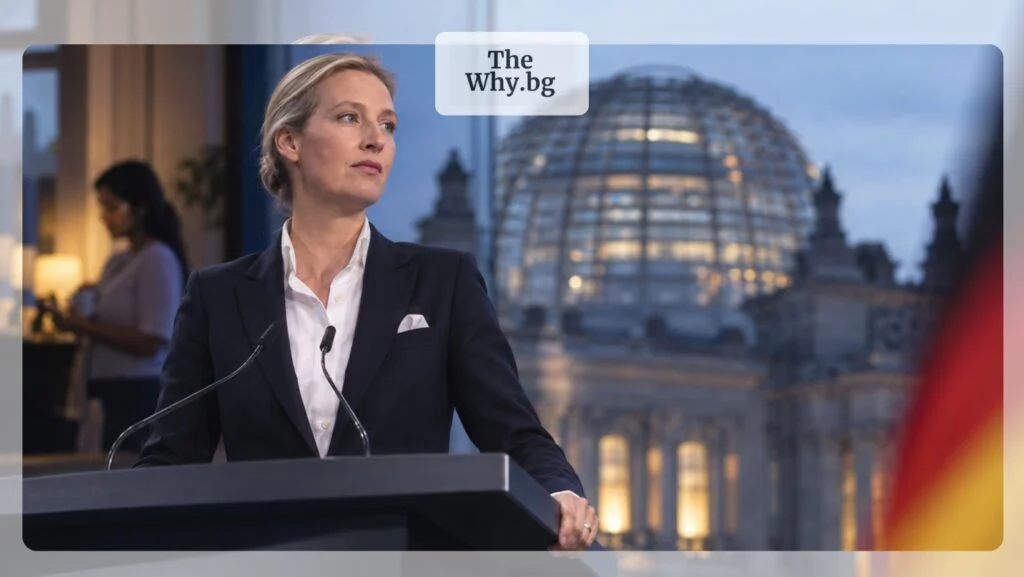
AUTHOR: Ruslana PETROVA
How is it possible for the leader of an anti-immigration party to live with a partner born in Sri Lanka? And why do voters accept such a contradiction as proof of “strong character” instead of seeing it as a carefully constructed political strategy?
Weidel is not Germany’s leader, but she is the face of its strongest far-right party
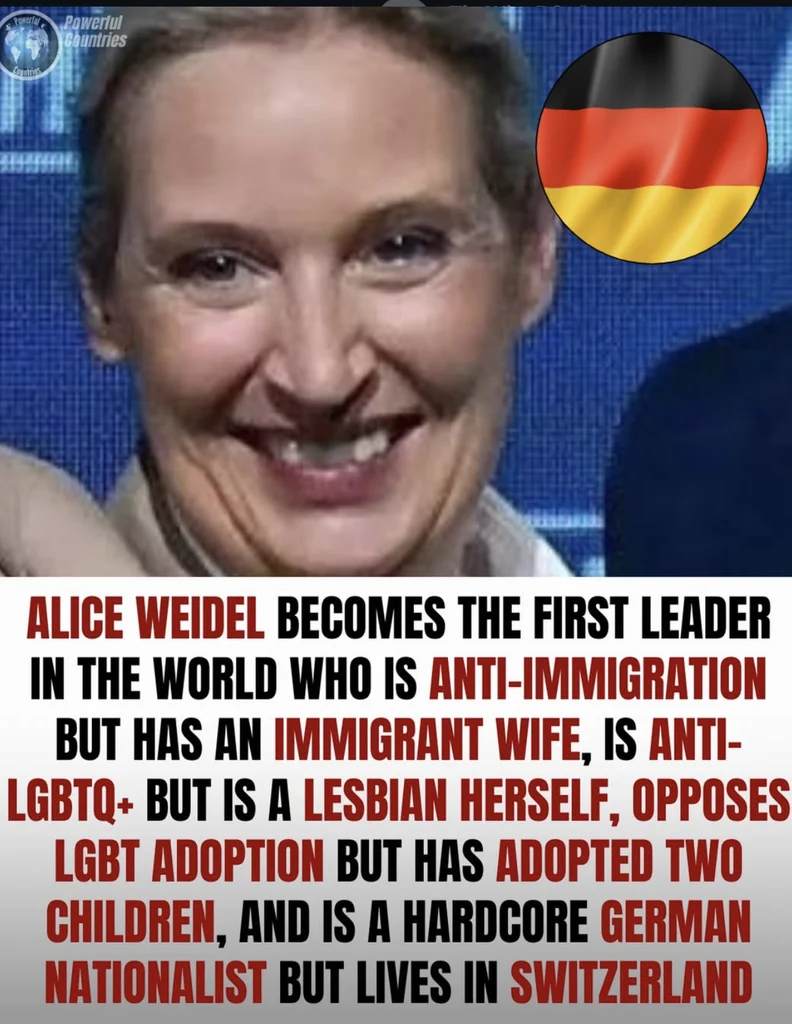
An image is once again circulating on social media claiming that Alice Weidel is “the world’s first anti-immigration leader with an immigrant wife”. The wording is inaccurate from the outset…
Weidel is not Germany’s chancellor. She is co-chair of “Alternative for Germany,” AfD, and was the party’s candidate for chancellor. The party received 20.8% of the vote in the federal election in February 2025 and became the second-largest political force in the Bundestag, with 152 seats. Reuters described her profile as unusual for a party with a hard-line anti-immigration and conservative platform.
Her personal life also does not fit the conventional image that AfD sells to its voters. Weidel lives in Switzerland with her partner, who was born in Sri Lanka, and their two children. Weidel herself is openly gay.
This is not a minor detail. AfD advocates a policy of national identity, calls for migration to be restricted and uses the term “remigration” , a term that in far-right political discourse can mean the forced expulsion of people of migrant origin. At the same time, the party opposes a range of liberal policies related to the LGBT+ community and family law.
At first glance, the contradiction is obvious. The political reality, however, is more cynical: far-right movements do not always require their leaders to serve as personal examples of everything they preach. Sometimes it is enough for them to be a convincing symbol.
The exception that is supposed to prove the rule
Weidel can be presented as “proof”, that AfD is not a racist or homophobic party.
The logic is simple: if the party has an openly gay leader with a partner of foreign origin, then how could it be intolerant?
This is a political trick known beyond Germany as well. The presence of one person from a minority does not automatically change an organization’s policies. It may simply serve as a shield against criticism.
Weidel is not the typical AfD voter, but she is the party’s ideal media product. She is educated, speaks several languages, has a career in economics and appears more moderate than the party’s most radical figures. This allows AfD to send two different messages at the same time.
To the moderate voter: “We are modern and professional.”
To the hard core: “We will close the borders, restore order and punish those who, in our view, are destroying Germany.”
This dual messaging is one of the reasons extremist parties are expanding beyond their traditional constituency.
AfD does not win through hatred alone
Explaining AfD’s rise solely through racism would be incomplete. The party taps into real fears about prices, security, housing, energy and the loss of social status, and links them to one culprit: the migrant.
That is the mechanism.
The problem may be complex, but the explanation is offered in a single sentence: “Foreigners are to blame.”
When a party repeats this for long enough, economic failure begins to look like a culture war. A housing shortage becomes a dispute over national identity. Problems in healthcare are blamed on refugees. Administrative failures are presented as proof that “the state has been betrayed”.
The voter no longer asks who was in power, what decisions were made and who benefits from the crisis. The only question is who is “the outsider.”
Why does the personal contradiction not repel voters?
The contradiction between Weidel’s personal life and AfD’s policies could be devastating for the party. But it only works if people expect politicians to be consistent.
Populism relies on the opposite. It does not sell a comprehensive ideology, but emotional belonging. To some voters, Weidel is a “brave woman”, who is unafraid to speak the uncomfortable truth. To others, she is proof that AfD is not the traditional far right. For still others, her personal life simply does not matter because the central message is directed at migration.
This is precisely where the political technology comes in: the leader can be an exception while the party insists that everyone else must submit to the rule.
Weidel can be “acceptable”, because she is the leader. Her partner can be “acceptable”, because she is part of Weidel’s personal life. But the same criteria are not applied to the millions of people AfD describes as a threat to Germany.
This is not a logical error for the party. It is a hierarchy.
Germany is no longer debating whether AfD is dangerous, but how far it can go
In 2025, Germany’s Office for the Protection of the Constitution designated AfD as “proven right-wing extremist” organization. A court later temporarily blocked the use of this designation while the legal dispute is pending. The decision does not mean that the allegations were declared unfounded, but that the final legal assessment has not yet been completed. Reuters described the legal proceedings and the temporary suspension of the classification.
Meanwhile, the party continues to grow.
In the regional elections in Mecklenburg-Western Pomerania in September 2026, AfD received around 38% and came out on top. This is proof that far-right politics in Germany is no longer a peripheral protest that traditional parties can ignore. Reuters reported on the historic result and the pressure on Chancellor Friedrich Merz.
The “Alice Weidel” paradox, therefore, is not merely a curious detail about a politician’s personal life. It shows how contemporary populism can use the individual exception to conceal collective policy.
A leader can have a partner from Sri Lanka. A leader can be gay. A leader can live in another country.
That does not answer the question of what happens to everyone else when her party gains power.
Comments